
Jihadism With a Human Face

Zohran Kwame Mamdani, elected mayor of New York in November 2025, became the first Muslim head of the largest city in the United States. His victory was hailed as a “historic turning point” for American Muslims. Mamdani—the son of Ugandan scholar Mahmood Mamdani and Indian filmmaker Mira Nair—positions himself as a progressive politician fighting for “Palestinian” rights, against Islamophobia, and for social justice. However, his past is rife with ties to organizations and figures accused of supporting terrorism, raising questions about whose interests he will represent in a city that endured the tragedy of September 11, 2001. Let’s break down the key aspects of his biography.
First, a bit of background—the role of Hamas and the Muslim Brotherhood
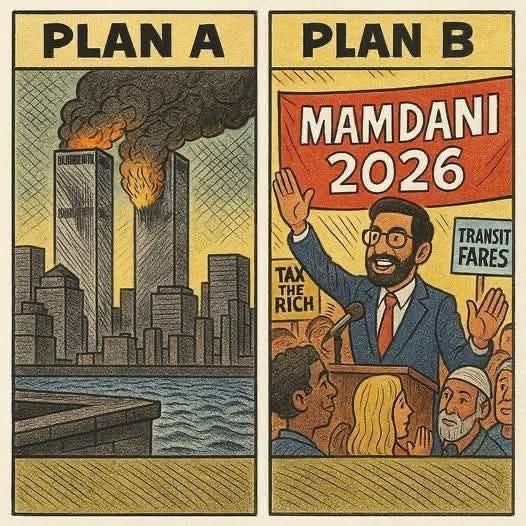
The roots of modern connections between American politics and Hamas networks trace back to 1988, when a key meeting of Muslim Brotherhood representatives and “Palestinian” activists took place in the U.S. According to Lorenzo Vidino’s investigation, “The Hamas Network in America: A Short History,” an expert on Islamism at George Washington University, the head of the “Palestinian” section of the Brotherhood arrived in the U.S. to coordinate with local members. This meeting became the starting point for the creation of the Palestine Committee—a subgroup in America focused on supporting the newly founded Hamas (as a “wing” of the Muslim Brotherhood). The strategy developed at this and subsequent meetings (especially in Philadelphia in 1993) centered on “soft power”: infiltration into media, universities, Congress, securing political positions in government, creating lobbying organizations; mobilizing the Muslim community through propaganda and fundraising under the guise of charity. Internal Hamas documents, uncovered by the FBI and in the Holy Land Foundation trial (2007–2008), emphasized “deception and camouflage”: internally—jihad and financial support for terror; externally—neutral facades to influence public opinion under slogans of democracy and free speech. This strategy included opposing “capitulationist solutions” like Oslo. Things get more interesting from here. Key organizations emerged from this network.
In 1994, the Council on American-Islamic Relations (CAIR)—which would later fund Mamdani’s campaign—was founded by several leaders of the Islamic Association for Palestine (IAP), a now-defunct group that the U.S. government labeled part of Hamas’s propaganda apparatus. IAP, founded in 1981 under the oversight of Khaled Mashal (future Hamas leader), distributed anti-Israel propaganda and raised funds. IAP leaders like Omar Ahmed, Nihad Awad, and Rafiq Jabar created CAIR as a “neutral” human rights organization, but an internal Palestine Committee memorandum from July 1994 listed CAIR among its structures. It was positioned as the “official American cover” for the Islamic community, masking radical goals. We’ll return to CAIR.
This “soft power” strategy spread to college campuses through Students for Justice in Palestine (SJP), founded immediately after the 1993 meeting by Hatem Bazian (linked to American Muslims for Palestine, AMP, IAP’s successor). SJP became a tool for mobilizing youth. We’ve covered the strategy and roots; now about SJP and Mamdani’s involvement in it.
Founding SJP: Activism in Support of Terrorist Figures
In the early 2010s, while a student at Bowdoin College, Mamdani founded a chapter of Students for Justice in Palestine (SJP)—an organization accused by the Anti-Defamation League (ADL) and the Institute for the Study of Global Antisemitism and Policy (ISGAP) of promoting antisemitism and supporting terrorism. SJP describes itself as a decentralized network for “Palestinian” rights and boycotting Israel (BDS).
Under Mamdani’s leadership, the Bowdoin SJP chapter organized events with radicals:
In November 2013, they invited As’ad AbuKhalil, a professor who defended George Habash (founder of PFLP) and accused the U.S. of “many 9/11s for other countries.”
In October 2013, Mamdani expressed delight at a visit from Ali Abunimah, co-founder of Electronic Intifada, who called on Europe to arm Hamas.
In 2014, SJP supported Rasmea Odeh, a convicted PFLP terrorist bomber; Mamdani “liked” a post about “justice for Rasmea.”
SJP as a whole has been repeatedly accused of supporting terrorism:
In February 2025, Georgetown University’s SJP planned a speech by Ribhi Karajeh, a PFLP member convicted of a 2019 bombing that killed 17-year-old Israeli Rina Shnerb (the event was canceled after condemnation by Congressman Ritchie Torres).
In December 2024, Columbia SJP quoted Leila Khaled, a PFLP plane hijacker from the 1970s, as a “freedom fighter.” In November 2024, police searched the homes of SJP leaders at George Mason University, finding weapons, Hamas and Hezbollah flags, and posters saying “death to America” and “death to Jews.”
In July 2024, National SJP (NSJP) held an event honoring Ghassan Kanafani, a PFLP spokesman. In May 2023, SJP organized events with Mohammed el-Mezain, convicted of supporting Hamas in the Holy Land Foundation case.
October 7
Eighty-three SJP chapters, including Columbia’s, signed and disseminated a statement in support of Hamas at midnight at the end of the day of the attack, leading the suit to insinuate that the content must have been drafted, reviewed, and signed by dozens of organizations “before and/or during the events of October 7 themselves.”
After the Hamas attacks on October 7, 2023, NSJP released a “Toolkit” calling the genocide “a historic victory for Palestinian resistance.”
After months of dormancy, Columbia SJP allegedly reactivated its Instagram account “three minutes before Hamas began its attack on October 7,” announcing a meeting and stating that supporters should “stay tuned.”
There are suspicions the group is so deeply tied to terrorists that it knew about October 7 in advance. Mamdani is proud of his SJP role, referencing it in speeches to the Democratic Socialists of America (DSA), which he joined in 2017 for its BDS support.
The Day of Resistance Toolkit included October 7-themed graphics, one of which Kiswani allegedly published on Instagram on October 7 – a day before the toolkit was released.
Shlomi Ziv’s testimony confirms SJP connection to Hamas
Plaintiff Shlomi Ziv, who was held hostage for 246 days before being rescued in an IDF operation, alleged that “Hamas captors bragged about having Hamas operatives on American university campuses” and showed him photographs of protests at Columbia University organized by the defendants. According to one ex-hostage, Hamas captors described these groups as their operatives.
The Song “Salaam”: “Love” for Convicted Hamas Financiers
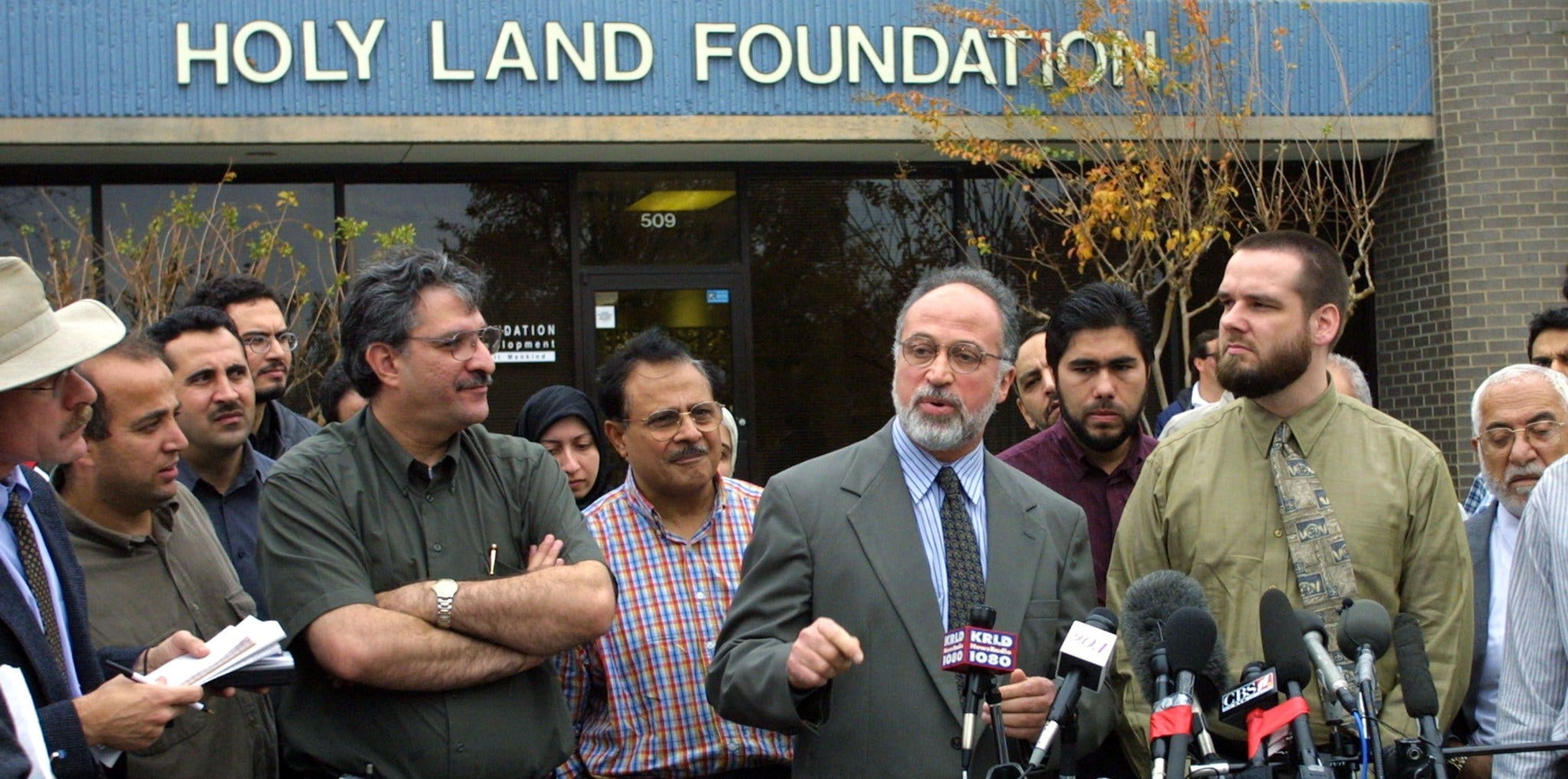
In that same 2017, performing under the pseudonym Mr. Cardamom, Mamdani released a rap song “Salaam” with the lyrics: “My love to the Holy Land Five. You better look ‘em up.” The “Holy Land Five” are the five leaders of the Holy Land Foundation (Shukri Abu Baker, Mohammed el-Mezain, Ghassan Elashi, Mufid Abdulqader, and Abdulrahman Odeh), led by the brother of Hamas leader Khaled Mashal, convicted in 2008 on 108 federal counts, including material support for Hamas, money laundering, and tax fraud. Sentences ranged from 15 to 65 years. In December 2024, many were pardoned by Biden. The song resurfaced during the 2025 campaign, prompting accusations from Elise Stefanik and the ADL of sympathizing with terrorism. Mamdani did not comment.
Justifications for Islamic Terrorists: From 2013 to the Present
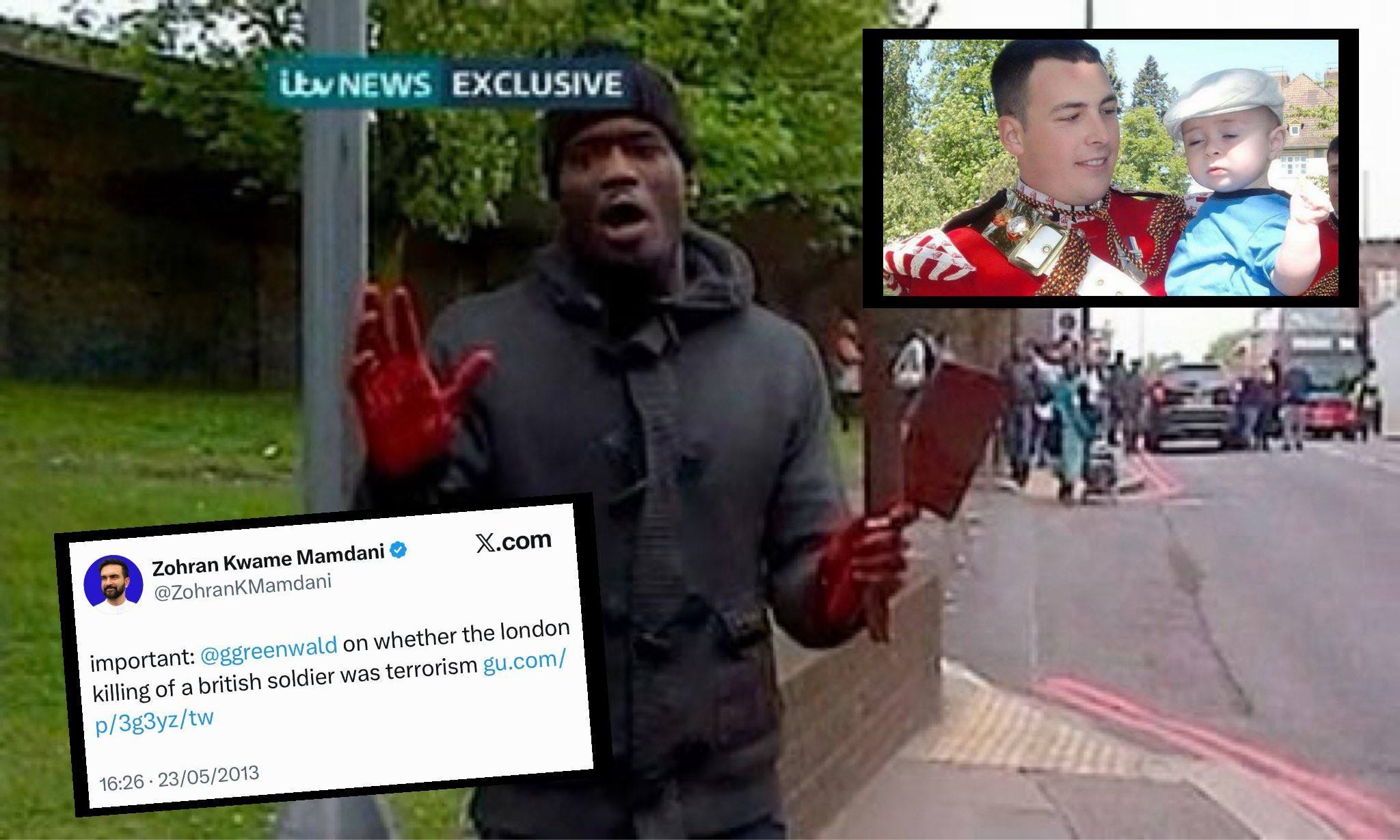
Mamdani has been repeatedly accused by the ADL, ISGAP, and Canary Mission of defending or supporting figures linked to Islamic terrorism. In 2013, through SJP, he provided a platform for AbuKhalil, who justified terrorists and blamed the U.S. for 9/11. In his student writings, Mamdani complained about stereotypes: “I grow a beard, and I’m called a terrorist.”
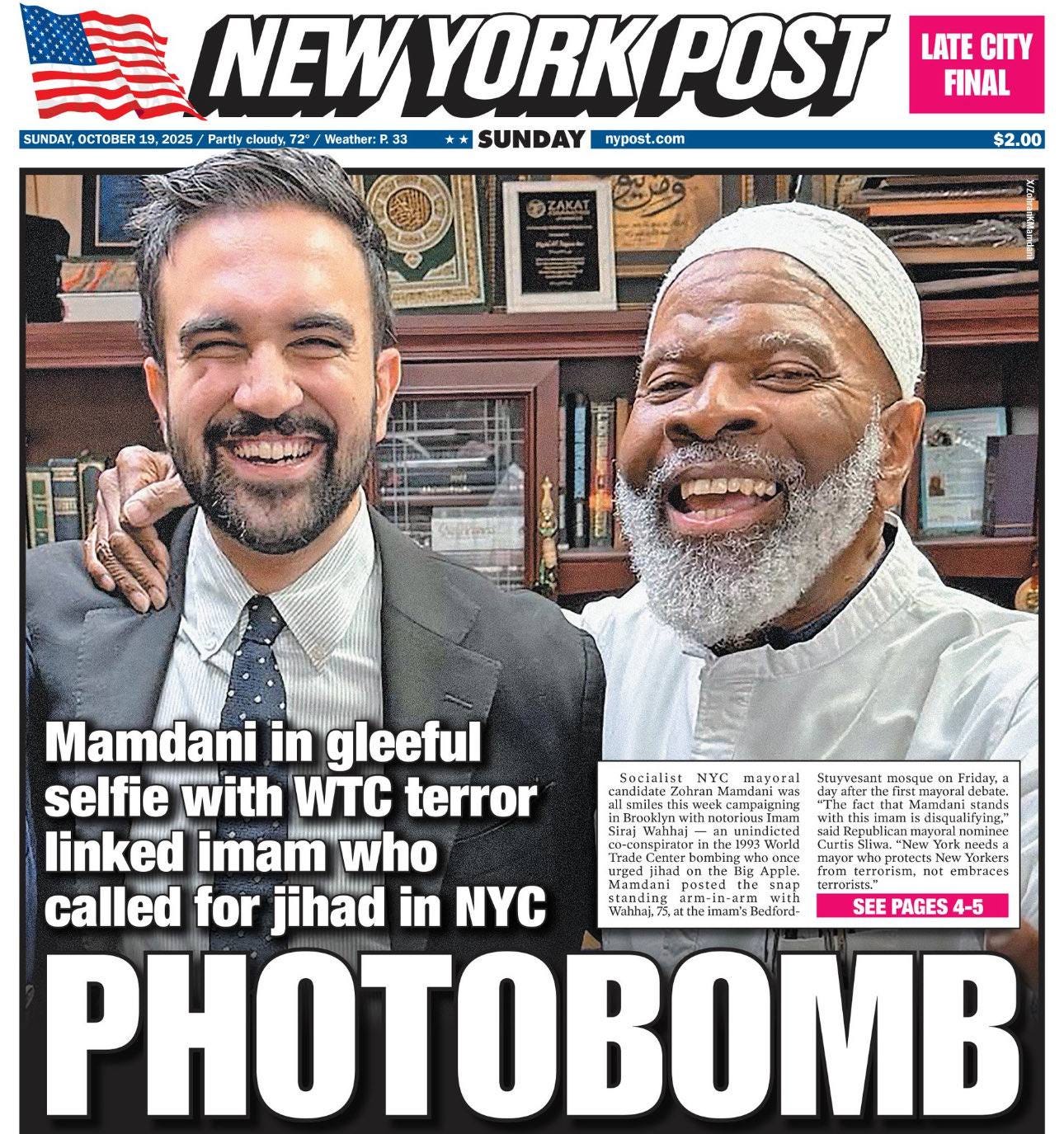
From 2023–2025, Mamdani refused to condemn Hamas, disagreeing that they should “lay down arms,” leading to Stefanik’s accusations of “jihadism.” He did not condemn the slogan “globalize the intifada,” associated with violence against Jews. In October 2025, Mamdani met with Imam Siraj Wahhaj, an unindicted co-conspirator in the 1993 World Trade Center bombing, and even called him a “pillar of the community.” He also posed with Gaza influencers who glorified the October 7 attacks.
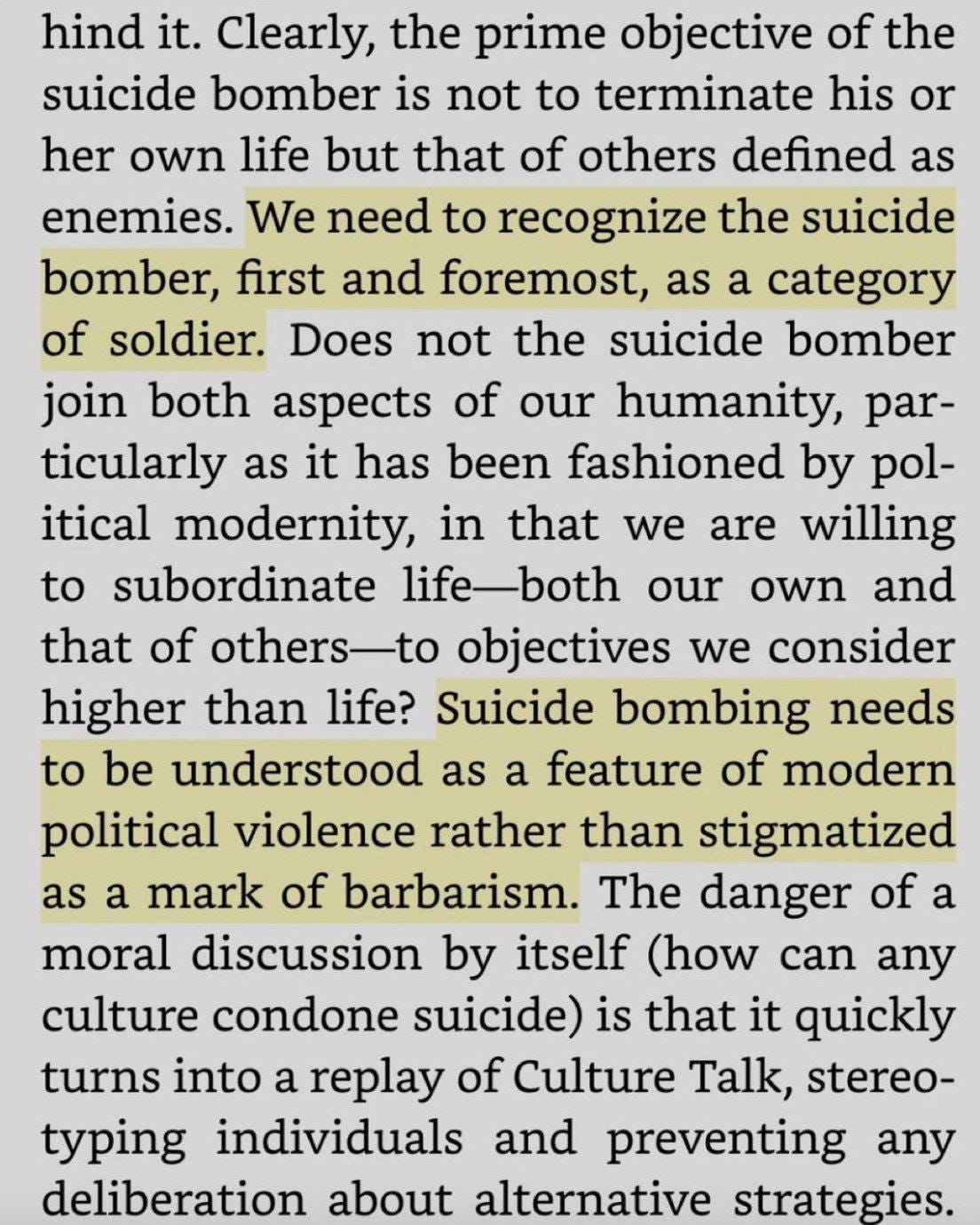
His father, a professor of anthropology, political science, and African studies at Columbia University, Mahmood Mamdani, has justified suicide bombers in his works as a response to colonialism per Fanon’s theory. Zohran himself rejects the accusations as “Islamophobic,” emphasizing his condemnation of antisemitism and terrorism.
Quotes from his works on the topic:
On the origins of terror: Mamdani links it to “U.S. foreign policy decisions, especially during the Cold War,” which “create conditions in which militant Islamism and political violence thrive.”
On suicide bombings: They should be “understood as a manifestation of modern political violence, not branded as a sign of barbarism.”
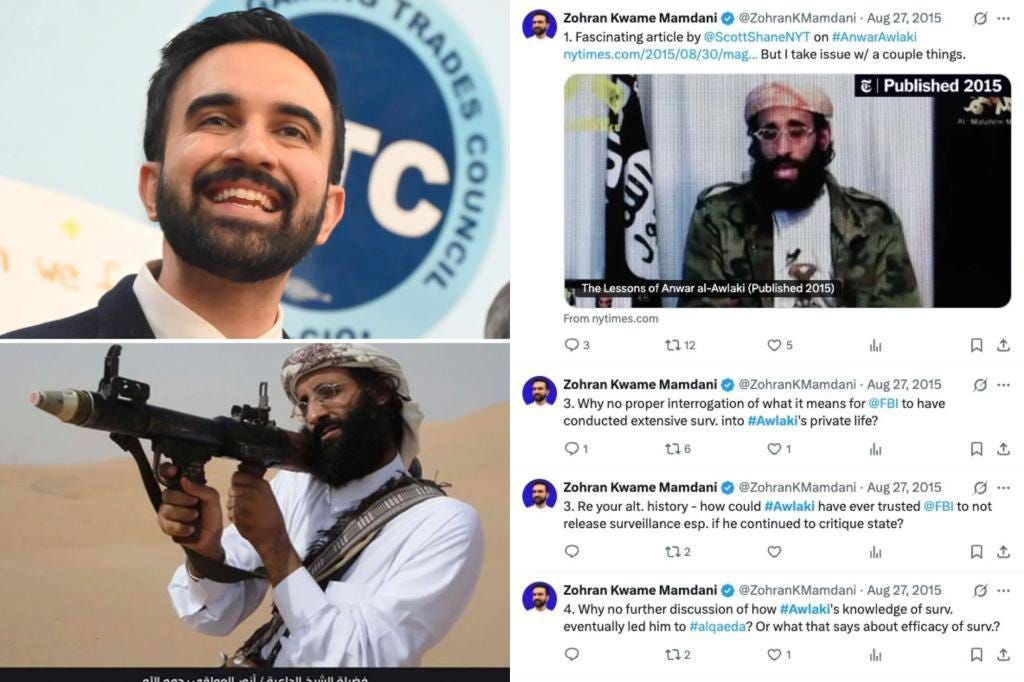
Views on 9/11: Muslims as the “Real Victims”
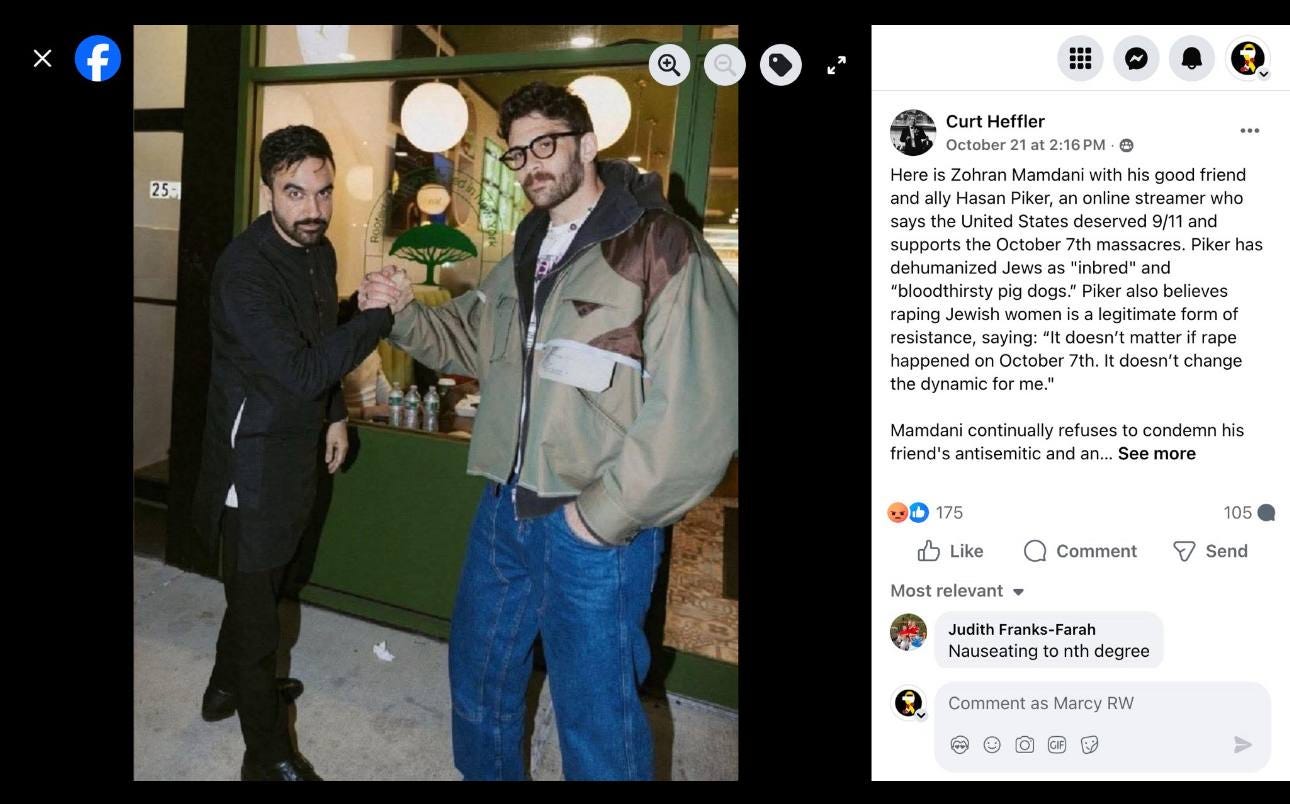
Mamdani was a 9-year-old child in Manhattan during the September 11 attacks, which shaped his views. He describes how the attacks heightened suspicion toward Muslims: his aunt stopped riding the subway in a hijab, he faced mockery and airport interrogations. Andrew Cuomo, JD Vance, and Eric Adams accuse him of portraying Muslims as the “real victims” of 9/11, especially given associations with Hasan Piker, who said “America deserved 9/11.” Mamdani dismisses this as political attacks.
Ties to CAIR: Funding from a Group with Terrorist Roots
Remember CAIR, which we discussed earlier? Time to return to it. The culmination of these ties—Mamdani’s close relationship with the Council on American-Islamic Relations (CAIR)—an organization accused by Senator Tom Cotton and Congresswoman Elise Stefanik of “deep ties to terrorist organizations.”
During Mamdani’s 2025 election campaign, CAIR and affiliated PACs provided significant financial support. The Unity and Justice Fund PAC, sharing an address and staff with CAIR’s foundation, donated $120,000. Unity Lab PAC added $23,500 in September 2025. Linda Sarsour stated at a CAIR conference that they became the “largest institutional support” for the campaign, representing over 80% of Muslim-American donors. In June 2025, CAIR quietly donated $100,000. After the victory, CAIR congratulated Mamdani, praising his opposition to the “genocide in Gaza.” In August 2025, CAIR defended him from ADL criticism.
Conclusion: Risk to New York and America in Perspective
The soft power laid out in Hamas’s strategy from the 1988 meetings and especially 1993 in Philadelphia, where Palestine Committee leaders—including CAIR predecessors—discussed “deception and camouflage” to infiltrate American institutions through front organizations, propaganda, and soft influence without direct violence, has fully come to life with Zohran Mamdani’s rise to power in New York—their candidate, with ties to SJP and funding from CAIR, is now mayor of the world’s largest city, where in the next four years Islamists will be placed in key posts in the administration, police, education, and media, with long-term consequences for U.S. security and policy, continuing the Democratic Party’s line of appointing Islamists to influential positions under Obama and Biden administrations, now openly promoting socialism through candidates promising redistribution, while voters vote against the free market; social-jihadism is the new trend in politics, where Democrats mask power grabs under the brand of “socialism” like in Sweden and other socially oriented countries, in reality handing the means of production into the same hands as terrorists, and these two groups today share goals—defeating capitalism and empire, but they remain silent on the main point: on the ruins of the old empire will come one less familiar in America—a caliphate. Because when the useful leftists finish clearing the field for Islam, they—along with queers, gays, and feminists—will simply be eliminated; Islamists know and honor their culture, and they know the place in it for all the above.
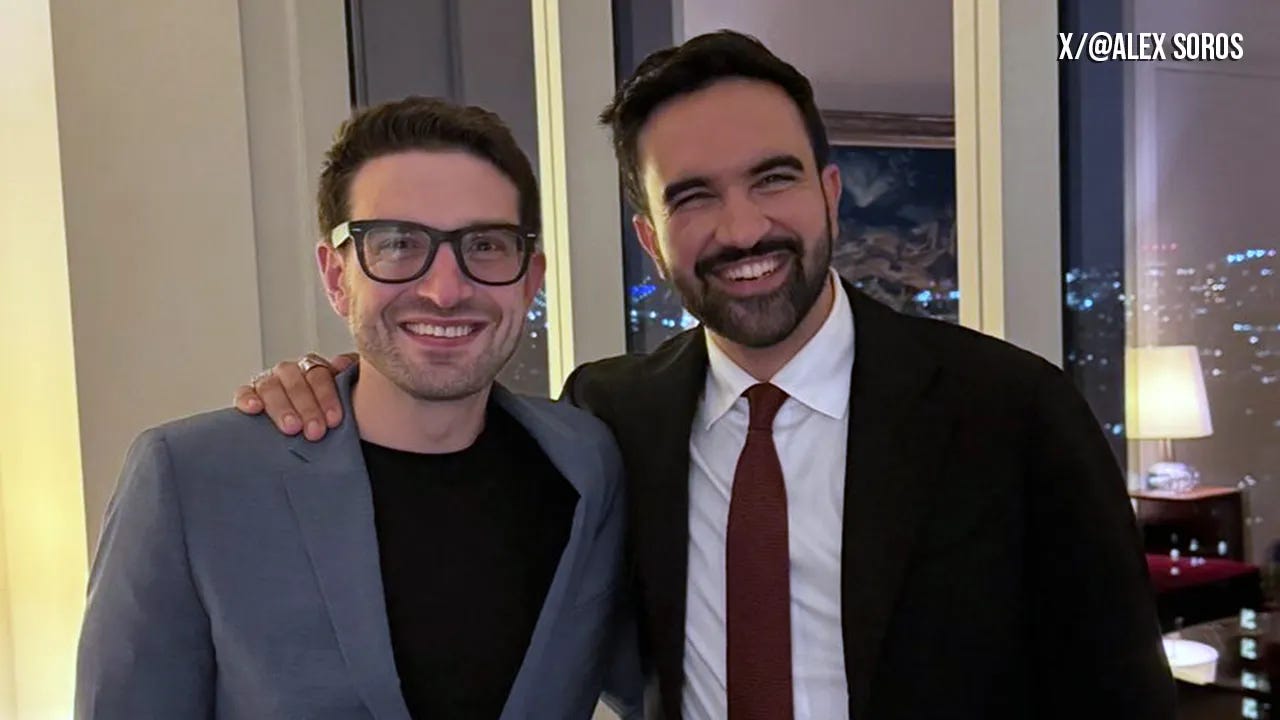
From the amusing side—George Soros’s son and Democratic Party partner globalist, Alex, has already been photographed with Mamdani and captioned: “So proud to be a New Yorker! The American dream continues!” That’s the dream today for progressive globalists and authoritarian socialists—who dream of being ruled by a caliphate.
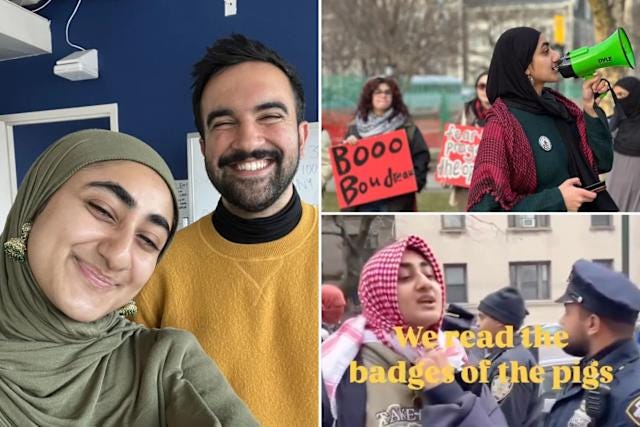
To conclude the text, I want to quote Mamdani’s campaign policy and communications staffer Hadika Arzu Malik, who was president of the SJP student group at CCNY and also interned at CAIR. In a video, she explains that Mamdani’s election is part of a holy war and jihad: “All of this is jihad, all of this is ibadat, all of this is predestined by Allah.” She is an open supporter of Hamas.
Good luck to you in these difficult times.